Network Layer
The network layer is responsible for addressing, forwarding, routing, and other tasks. It is the second layer from the 4 layer internet model:
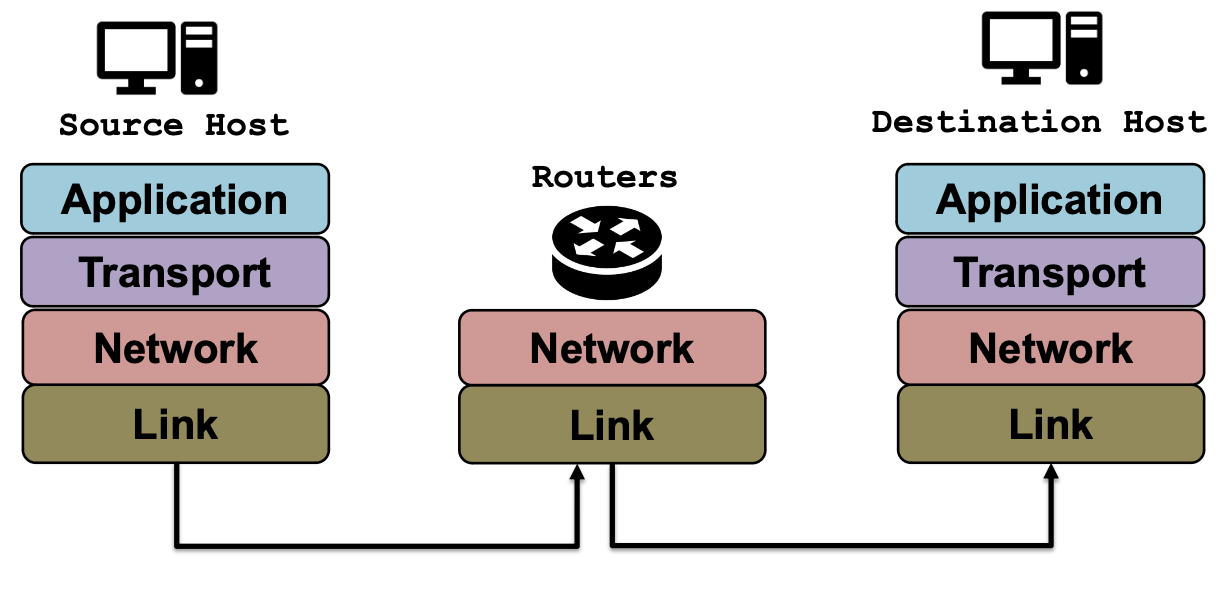
The networking layer is present everywhere.
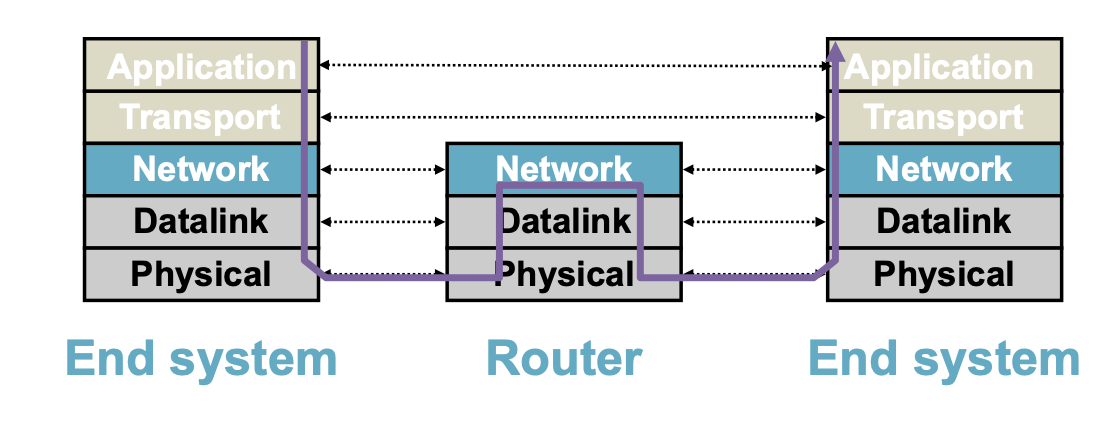
Context and Terminology
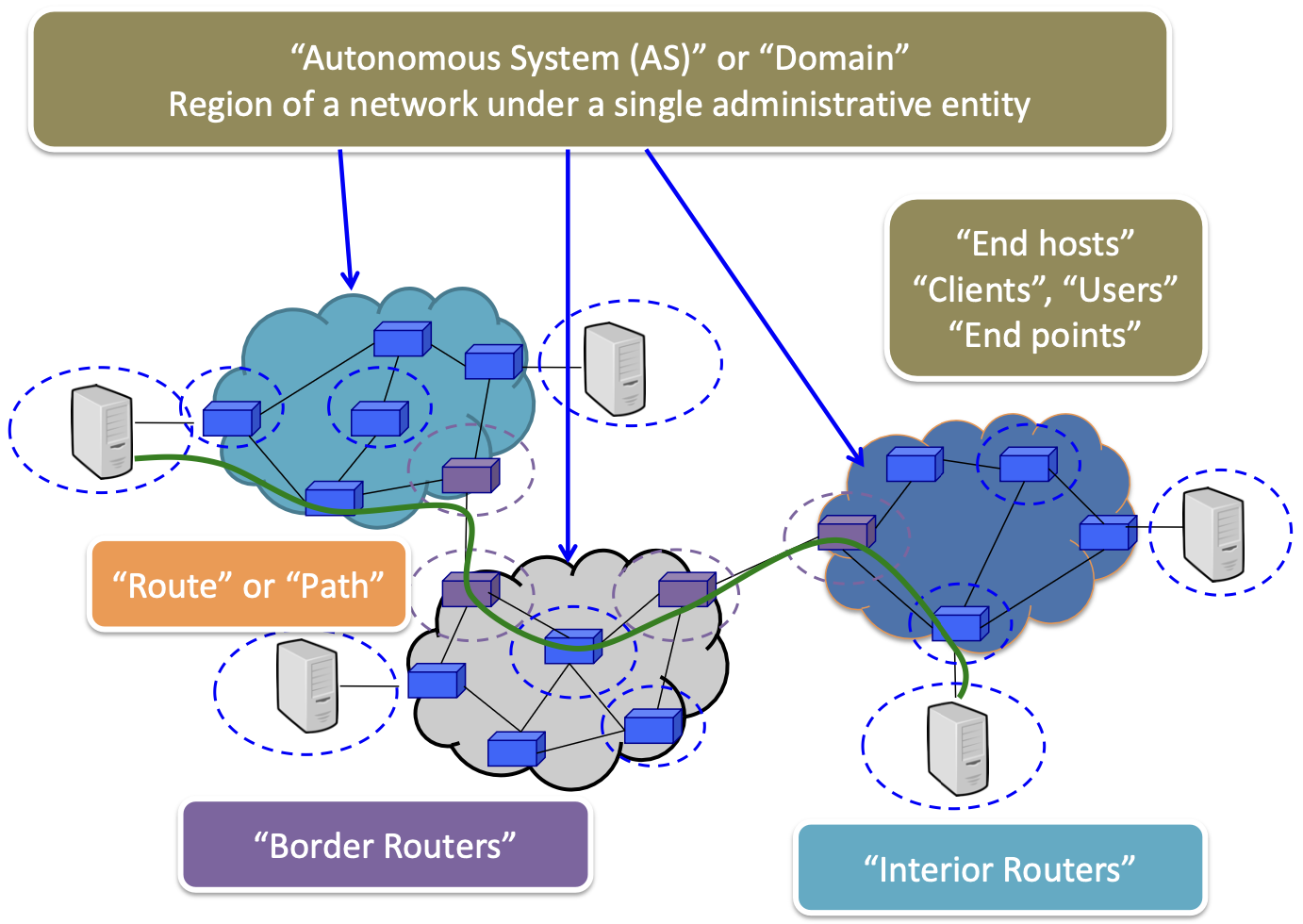
"Autonomous Systems (AS)" or "Domain": region of a network under a single administrative entity. For example, a university like JHU, a country, or a company like Google.
"Border Routers" these are specific kind of routers that are responsible for communicating with other domains.
"Interior Routers" are in a domain, and they are connected in a way so that you are connected with the whole network.
"Route" or "Path" is the sequence of routers (both interior and border routers) a packet uses to reach the destination. One router can be the source and it follows the route to reach its destination.
"End hosts", "clients", "users", "end points" refer to the same thing
Forwarding is determining where the packet should be sent to next. At each router there's a table called the forwarding table, which lets the router knows what port number you should send the packet to depending on its destination; maps the destination to the next hop.
- It directs a packet to the correct interface so that it progresses to its destination? Local, the next hop.
- How? it reads the address from the packet header and searches the forwarding table.
Routing is setting up network-wide forwarding tables to enable end-to-end communication on a global level. Done through different routing protocols.
What is the difference between forwarding and routing?
- Forwarding or "data plane": directs one data packet, each router uses a local routing state
- Done using the table.
- Routing or "control plane": computes the forwarding table that guides packets. Jointly computed by routers using a distributed algorithm or being computed externally.
- Fills out the table
- They have very different timescales
Linked from Computer Networks